Прием статей в выпуски журнала 2026 г. закрыт досрочно.
Редакция принимает статьи на 2027 г.
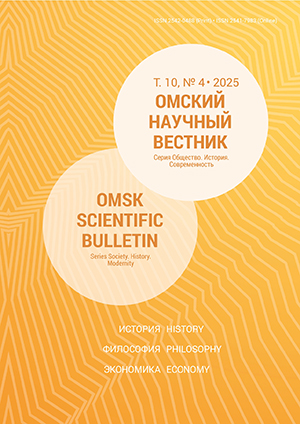
Omsk Scientific Bulletin. Series Society. History. Modernity is a peer-reviewed scientific journal of academic research in the scientific areas of History, Philosophy, and Economics published by the Omsk State Technical University. The Editorial Board supports interdisciplinary research through publishing of its results. Accepting papers in the declared scientific areas, the Editorial Board focuses on the processes of historical and socio-economic development of Omsk Irtysh Land.
The journal publishes original research articles, as well as interviews with famous scientists who visited Omsk; scientific reviews/analysis; translation of works of foreign specialists with commentary articles to them; historical sources with commentary to them. The publication is aimed at researchers and university professors, graduate and doctoral students, local historians, as well as a wide circle of readers interested in various topics in the field of modern humanities and socio-economic sciences.
Current issue
ИСТОРИЯ. Актуальная история
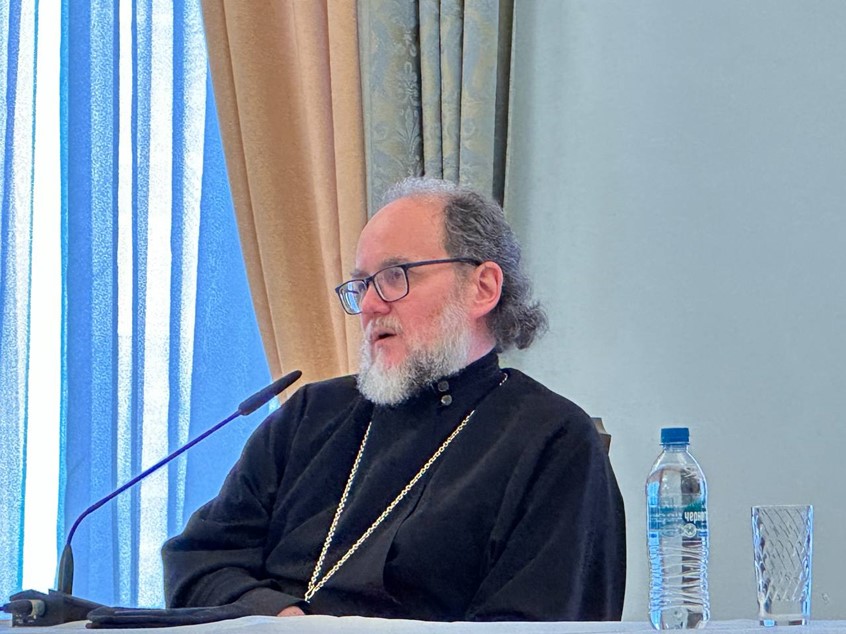
Alexander Vladimirovich Mazyrin is a priest of the Russian Orthodox Church, Doctor of Theology, Doctor of Church History, Candidate of Historical Sciences, Professor and Chief Researcher at St. Tikhon's Orthodox University for the Humanities. He specializes in the history of the Russian Church in the 20th century and its relations with the Patriarchate of Constantinople and other Local Churches.
An interview was arranged during the scholar's visit to Omsk in May 2025 and it was recorded in Moscow in January 2026. The conversation focuses on the history of the Russian Church during the era of social upheaval with a particular focus on the issue of Church reforms, Renovationism and the politicization of the Church. The nature of a number of phenomena is clarified. A comparison of the political positions of two saints of Patriarch Tikhon of Moscow and Archbishop Sylvester of Omsk is made and the circumstances of the latter's death are discussed.
HISTORY. Following the VI International Scientific and Practical Conference “The Civil War in Eastern Russia: A Look through Documentary Heritage”
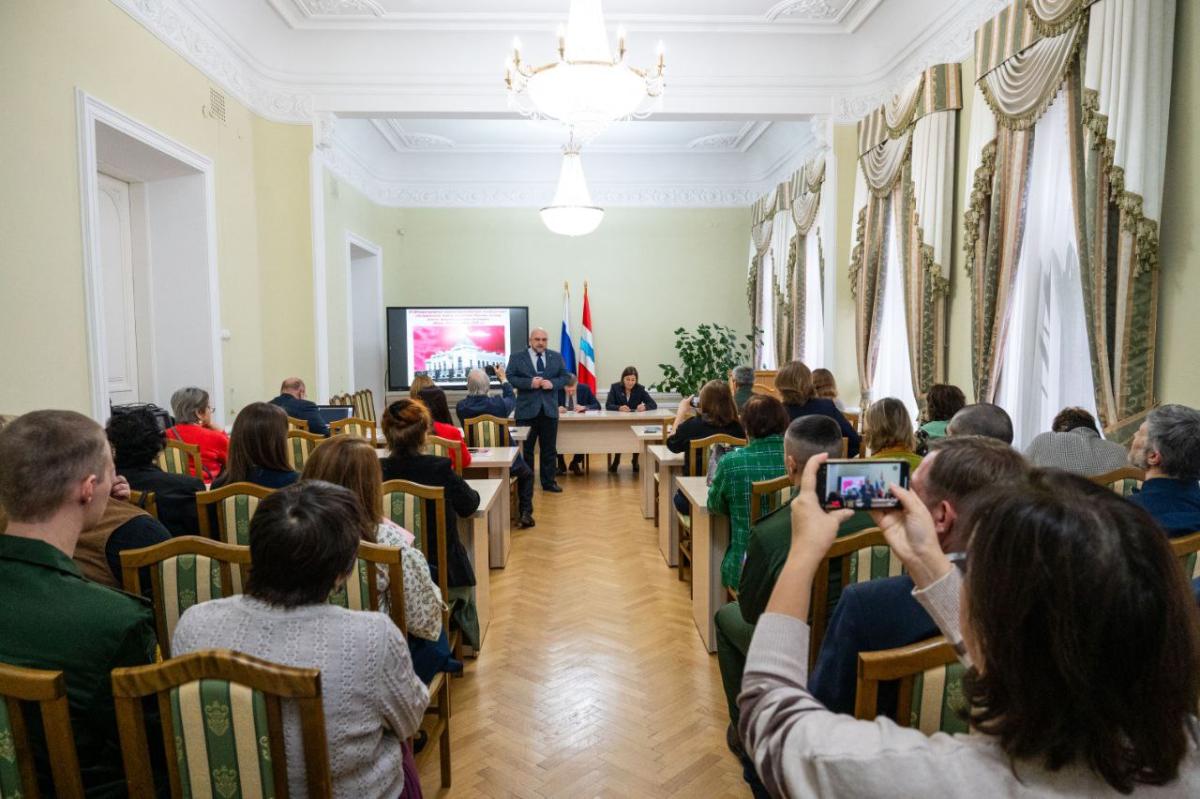
The paper presents a review of the VI International Scientific and Practical Conference “The Civil War in Eastern Russia: A Look through Documentary Heritage”, held in Omsk on October 22–23, 2025.
Considering the publication's genre, the key research method is problem-based chronology. The principles of systematicity and determinism allows analytically summarizing the key milestones of the conference as a significant event in the scientific and social life of the Omsk region with its own causality and obvious consequences.
The author presents key issues in the participants' papers. Moreover, the author highlights the collaboration between the Editorial Board of the journal Omsk Scientific Bulletin. Series Society. History. Modernity and the conference Organizing Committee in the development of historical science.
The article provides a comprehensive analysis of the attempt by Admiral A. V. Kolchak’s Russian Government in the spring of 1919 to address the issue of maintaining World War I prisoners of war in Siberia by releasing and repatriating individuals of “Romano-Slavic” origin, primarily Serbs, Croats, and Slovenes.
Considering a wide range of unpublished archival documents from Russian and French repositories, the article reconstructs the process of interdepartmental and diplomatic consultations between Omsk, the headquarters of the Allied command in Siberia, and European capitals. The paper reveals a complex set of reasons for the failure of this initiative: the cautious and often skeptical stance of the Allied command in Siberia led by General M. Janin, who rightly pointed to the risks of destabilizing public order and the lack of transport infrastructure for mass evacuation; the unpreparedness of the newly formed national states in Europe to promptly organize the reception of their citizens; and internal bureaucratic complications.
As a result, the release was postponed. The fate of thousands of Yugoslavs was only resolved after the end of the Civil War, and their return home stretched over 1920–1922, involving stages of continued internment in camps, participation in White formations, and a lengthy repatriation process.
The article is devoted to a historical-anthropological analysis of the fates of siblings, found in 1917– 1922 on different sides of the political and socio-cultural confrontation, which allows considering the phenomenon of civil division at the level of microsocial structures and intra-family ties.
The relevance of the research is determined by the need for an in-depth understanding of the mechanisms of formation of individual identities in the context of a radical transformation of the social order, when the choice of a political position is accompanied by a break in traditional forms of kinship communication. The aim of the article is to identify the anthropological mechanisms of identity divergence and social adaptation strategies based on a comparative analysis of the representatives biographies of various social and cultural groups.
As a result, the author highlights that family affiliation sets only the initial framework of socialization, but does not determine the final choice, whereas individual values and professional identities become key factors of political self-determination and subsequent integration into Soviet society or emigration.
The authors of the article focus on the participants of the White Movement who appeared in exile in Harbin, the center of the Chinese Eastern Railway’s alienated zone, as a result of the collapse of the Eastern Front of the Civil War, during 1920. The main source of the research is the unpublished diary of Colonel Iosif Sergeevich Ilyin (1885–1981), which is stored in the State Archives of the Russian Federation.
Based on the history-biographical method within the framework of an anthropological approach, the article analyses the behavioral practices of the White Movement leaders, the strategies of social adaptation of military emigrants to new conditions and the psychological and ideological crises of refugees. Moreover, the researchers’ aim is to show how the personality of the diary’s author and his involvement in the process of adapting to the new environment influence on the portrayal of the Harbin reality in 1920.
The article emphasizes the importance of using ego-documents to study the consciousness of the participants of the White Movement, who were at the “breaking point” and started their lives in exile from scratch.
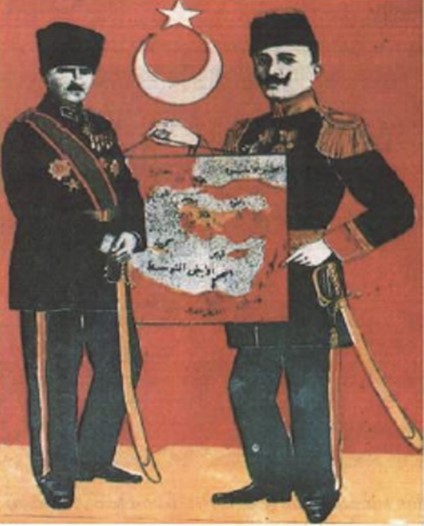
Basmachism is one of the long-lasting, complex and tragic forms of anti-Soviet, and in some cases, antiRussian resistance, bearing the features of the national liberation movement in Central Asia. The problem is still the subject of discussion. The discussions of historians are influenced by the positions of politicians and the presentation of the problem by journalists. The purpose of the research is to analyse the international influence on the development of the Basmachi movement, its assessment by historians and politicians in Russia and Central Asia.
The authors use the historical and genetic method, which allows identifying cause-and-effect relations; to the historical and comparative analysis for comparing historical events, the development of states in time in order to demonstrate ommon and special features; to the system and structural method for reconstruction of events and identifying patterns of socio-political development on the designated territories. An integral part of the research toolkit is the ideographic (narrative) method for describing the unique events and personalities of a bygone era.
The results confirm that the Basmachi movement had a clearly defined transnational features. Moreover, the rebels by Soviet troops found refuge on the Afghan territory, from where they launched armed raids on the territory of the USSR republics. The Basmachi leaders negotiated with the Afghan leadership and British representatives in British India in search of political and material support. During the 1920s and 1930s the course of the conflict of geopolitical aspects was influenced by the ethnic differences of the people living on the territory of Middle and now Central Asia.
The article analyses the impact of the Provisional Government's reforms on Czech and Slovak military units within the Russian Army. It compares the complex legal norms that democratised military service and those that conflicted with the need to maintain military discipline to achieve the primary goal of creating a national state.
The research's methodological component is a synthesis of historical-genetic and comparative historical methods. Therefore, it allows tracing the relations between the evolution of ideological views in the national Slavic military units of the Russian Army and changes in global politics, as well as the impact of these processes on the military discipline of Czechs and Slovaks, who became participants in the Russian Civil War.
Based on a wide range of sources, the author concludes that liberal military practices accelerate the "automatization" of the Czechoslovak Corps, giving freedom to junior officers who became the main driving force of the Czechoslovak rebellion. In turn, the creation of a national state and the end of the First World War led to the need to combat excessive democratization in the army, which chronologically coincided with the withdrawal of parts of the corps to the rear of white Siberia.
The article is devoted to the study of the main socio-professional and family and demographic indicators of officers from the Tambov province in the Siberian Rifle Regiments on the eve of the First World War and their life trajectories during the war. The research is based on pre-war unpublished sources on the personnel of these military units from the Russian State Military History Archive, as well as on documents from the Military Department of the First World War related to the registration of losses and awards for officers.
The methodological block is presented by a combination of prosopography and microhistory, which allows achieving the research’s aim – to identify and analyse the common features and private nuances in the biographies of officers.
The author analyses the officer corps on the scale of branches of the armed forces, military educational institutions, districts and the army as a whole, basing on the research’s results of small officer groups. Moreover, the methods, combination allows getting out of some stereotypes about officers of prerevolutionary Russia in Soviet and modern Russian historical science, as well as considering the problem from another scientific point of view.
The article analyses the life strategies of former Kolchakites in the Soviet political system on the example of officers of the 7th Kamyshlov (27th Kamyshlovo-Orovaisky) Mountain Rifle Regiment. Based on mostly unpublished sources from state and departmental archives, the paper reconstructs the biographical trajectories of officers who lived in the Urals in the 1920–1940s, and also identifies universal and regionally specific mechanisms and criteria for their (non-) success in adaptation.
The authors established that out of 189 regiment officers (on November 1, 1918), 53 persons were subjected to political repressions, accounting for 35 % of the total. Repressions occurred in three waves (1920s, early 1930s, 1937–1938s) with different motivations and legal grounds. Some former officers managed to integrate into Soviet society, continued military or civilian service and even received state awards.
The authors conclude that the state during the Civil War needed the competencies of its former enemies, but could not overcome suspicion of their past, which turned the Civil War experience into a permanent factor of social risk.
ФИЛОСОФИЯ
Animalism, as a theory of diachronic personal identity, asserts that the only necessary criterion for the survival of a human person over time is its connection to the human animal. Opponents of animalism, however, use numerous thought experiments, the most famous of which are the Brain Transplant Case and the Remnant Person Case, to demonstrate that the original thesis of strict animalism, despite all its metaphysical conciseness, cannot be accepted because it contradicts our fundamental psychological intuitions.
A possible solution is offered by an original variation of animalism, based on the hylemorphic metaphysics of form and matter of Aristotle and Thomas Aquinas, – hylemorphic animalism. As a necessary condition for the preservation of the human personality, this view asserts its identity not simply with a biological organism, but with a rational and sentient substance. It examines the basic tenets of hylemorphic animalism regarding diachronic identity, and whether hylemorphic animalism can offer a solution to the brain transplant and remnant person thought experiments that differs from strictly materialistic variants of animalism.
The research concludes that hylemorphic animalism, despite introducing a substance identical to the human person, does not provide a qualitatively different solution to the Brain Transplant Case, but allows for an effective resolution of the Remnant Person Case.
PHILOSOPHY. Pros and Cons
The article is devoted to the analysis of the main points of Alain Badiou’s early works, in which the author, relying on his own reading of Louis Althusser, Gaston Bachelard, Georges Canguilhem and other representatives of French epistemology, develops the notion of a materialist epistemology of mathematics. The intersections and divergences with the tradition of analytic epistemology, represented in the persons of Rudolf Carnap and Willard Quine, are explored, culminating in the Badiou’s concept of model and historicity of mathematical production.
The article presents a comparative analysis of the humanistic projects of Michel Foucault and François Laruelle. It examines the genealogy and key tenets of Foucauldian anti-humanism and Laruelle's non-humanism.
The author shows how Foucault’s anti-humanism, despite its critique of metaphysics, falls into a “perverse” structure: it presumes to know what the Other needs and thereby imposes a new form of alienation. Laruelle, on the contrary, proposes a non-humanism based on the radical immanence of the “ordinary man,” that derives knowledge of himself from himself, bypassing philosophical intermediaries. The key distinction between the two approaches is considered along the psychoanalytic lines of perversion (Foucault) and autism (Laruelle): whereas the former becomes entangled in ethically discordant relations with the subject, the latter affirms the self-sufficient, axiomatic solitude of man. The author also demonstrates how the methodology chosen by each thinker is intrinsically linked to their conceptions of the human.
As a result, the question of humanism emerges as a diagnostic key to the very core of philosophical theory and practice, to their differentiating mechanisms, the product of which is an ontological and epistemological incision of the subject of philosophical knowledge.
ФИЛОСОФИЯ. Провокации
The article examines the moral groundings of the prepunishment practice, punishment for a crime before the crime is committed. Contrary to intuitions, there would not be anything wrong with punishing someone before he committed a crime, if only we could know exactly or be sure beyond reasonable doubt that he intended to and would in fact commit it.
PHILOSOPHY. In memoria classica
The article proposes the reassessment of Friedrich Waismann’s place in the history of twentieth-century analytic philosophy. It argues that his long-standing reputation as a mere expositor of Wittgenstein’s ideas has obscured his role as an independent thinker who made an important contribution to the Vienna Circle and to the emergence of Oxford ordinary language philosophy.
Special emphasis is placed on the Oxford period of his work, in which Waismann’s two key ideas — ‘open texture’ and ‘language strata’ — take final shape in his theory of many-level structure of language. The paper examines the notion of open texture as one of the foundations of Waismann’s linguistic anti reductionism and traces its later influence on analytic jurisprudence and cognitive psychology. It also analyses his conception of language strata in order to show how Waismann reached the view that different conceptual domains involve different logics, standards of verification and senses of truth. Special attention is also paid to his English-language writings of the Oxford period, where theoretical originality is combined with a distinctive philosophical style.
Thus, the article presents Waismann as an original philosopher of language, whose legacy calls for a more precise historical and systematic assessment.
This article critically examines the ‘linguistic approach’ in philosophy, which limits research to the analysis of word usage. It argues that language does not always adequately reflect reality and conceals both rational and irrational elements. It demonstrates that philosophers must identify underlying foundations that go beyond lexicographic analysis and develop new categories to describe experience. Particular attention is paid to the analysis of idioms, metaphors, and scientific concepts.
ECONOMY
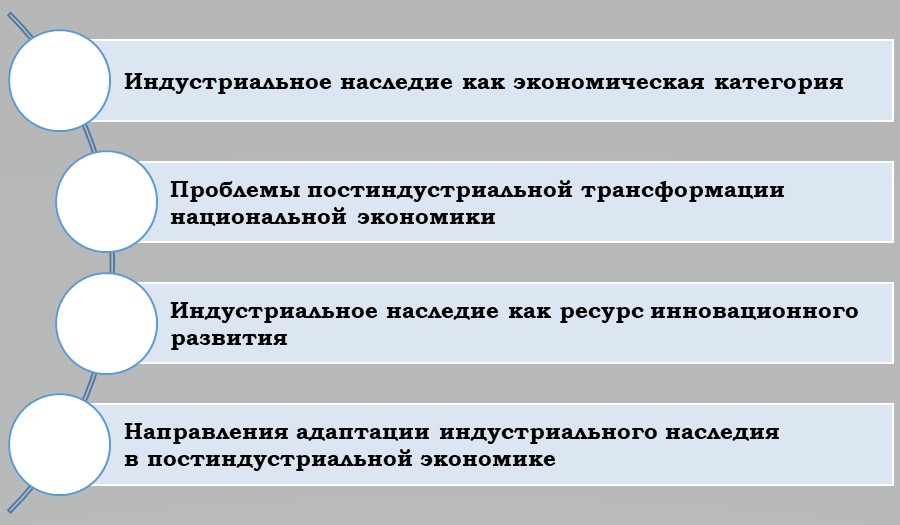
This article examines the role of industrial heritage in shaping the trajectories of post-industrial development of the national economy. The relevance of the study is determined by the growing contradiction between the structural legacy of industrialization and the requirements of the knowledge-based, innovation-driven economy. The purpose of the research is to identify key problems, risks, and opportunities associated with the transformation of industrial heritage under post-industrial conditions. The study addresses the tasks of conceptualizing industrial heritage as an economic category, analyzing structural and institutional barriers to transformation, and assessing its potential contribution to sustainable economic growth. The research is based on a systematic and comparative analysis of theoretical approaches and empirical findings related to industrial transformation and post-industrial development. The results demonstrate that industrial heritage has a dual impact on economic dynamics. When preserved in its outdated form, it may hinder structural flexibility and innovation. However, under conditions of technological modernization, institutional adaptation, and effective industrial policy, industrial heritage can become a significant resource for innovation, regional development, and competitiveness.
The article proposes an integrative approach that overcomes the traditional opposition between industrial and post-industrial development models. It is argued that the strategic use of existing industrial potential, combined with investments in human capital and innovation infrastructure, contributes to balanced structural transformation. The findings expand the understanding of post-industrial development mechanisms and may be used in designing long-term national economic and industrial modernization strategies.
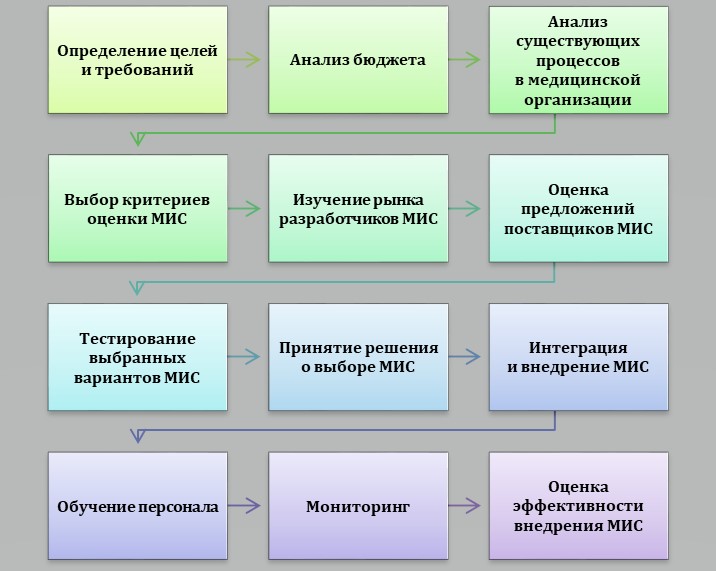
The modern medical information systems market is rapidly developing, offering a wide range of solutions for automation and digitalization of medical institutions.
The optimization of work, the speed and quality of patient care and the degree of satisfaction with the clinic's work largely depend on the use of a suitable medical information system. The management of a medical institution has the problem of choosing the medical information system that meets the requirements of doctors, patients and with the appropriate clinic capabilities. Many existing systems do not fully meet all the necessary criteria and difficulties with choosing, evaluation of system effectiveness, integration with other clinic systems and staff training. The authors conduct the research and analysis of the features and functionality of existing systems on the Russian medical market for the optimization of choice of medical information systems.
As a result, the authors identify key criteria and highlight that choosing the optimal medical information system requires considering of some factors, such as the functionality of the system, the cost of its purchase and implementation, the usability, the integration with other systems, as well as the compliance with legal requirements, the needs of a medical institution and the need to ensure high quality of medical services.
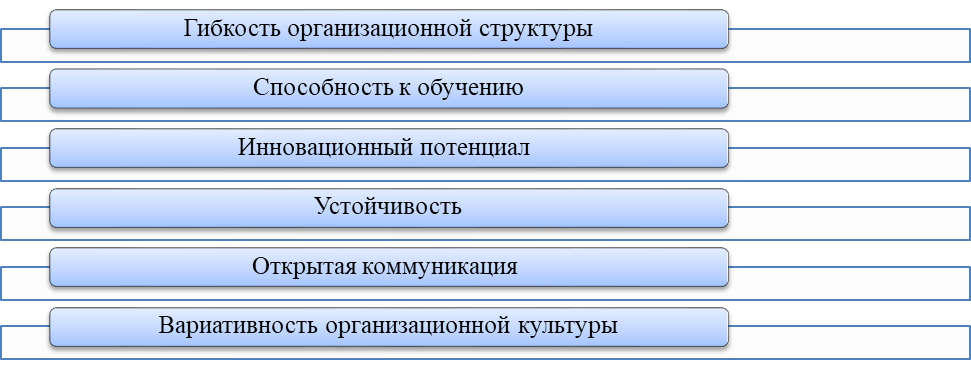
The article examines the role of adaptability as a key principle of effective crisis management in the context of modern economic challenges.
The purpose of the study is to develop theoretical foundations and substantiate organizational adaptability in a crisis. The research highlights the key objectives: to Define the concept of "adaptability" in a crisis; to identify its significance and features in an unstable economic context; to explore the main characteristics of adaptive systems, including their structure, processes and mechanisms that contribute to a high level of adaptability to external and internal challenges; substantiate new factors and conditions that enhance organizational adaptability. The object is organizational systems operating in Russian conditions, and the subject is the phenomenon of adaptability within the framework of the anti-crisis management system.
The research applies general scientific methods, including comparative analysis, modeling, logical and abstract methods, which ensured the systematic and theoretically nature of the obtained results. Authors identify new factors contributing to increased organizational adaptability, such as the introduction of new technologies, the development of an organizational culture of innovation and ensuring management flexibility.
The practical value lies in the formation of mechanisms for increasing the adaptability of organizations, which contributes to the development of their anti-crisis potentials and increased sustainability. The research allows expanding the theoretical basis for understanding adaptability as a strategic resource and the basis for developing effective models of crisis management in modern conditions.
Announcements
2026-03-08
Уважаемые читатели!
Сегодня наш Омский научный вестник. Серия «Общество. История. Современность» отмечает свой первый Юбилей. Журнал был основан 31 марта 2016 года как научное рецензируемое ежеквартальное издание.
За истекшие 10 лет существования журнал преодолел сложный и полный препятствий путь от небольшой региональной площадки научной коммуникации до признанного в России периодического научного издания. Сегодня, стоя на пороге нового 10-летия журнала, мы по-прежнему считаем своей главной целью быть современной, открытой, требовательной к качеству и в то же время доступной общероссийской площадкой для научной коммуникации и обмена идеями в области социально-гуманитарного знания.
Я искренне благодарю всю команду Редакции, Авторов, Рецензентов и Учредителей в лице Омского государственного технического университета, а также тех, кто был с нами эти годы, и поздравляю всех с первым Юбилеем! Это повод вспомнить пройденный путь с благодарностью и уверенно шагнуть вперед, где нас ожидают новые темы, новые дискуссии и новые талантливые Авторы.
Главный редактор
Андрей НЕХАЕВ
| More Announcements... |

ISSN 2541-7983 (Online)